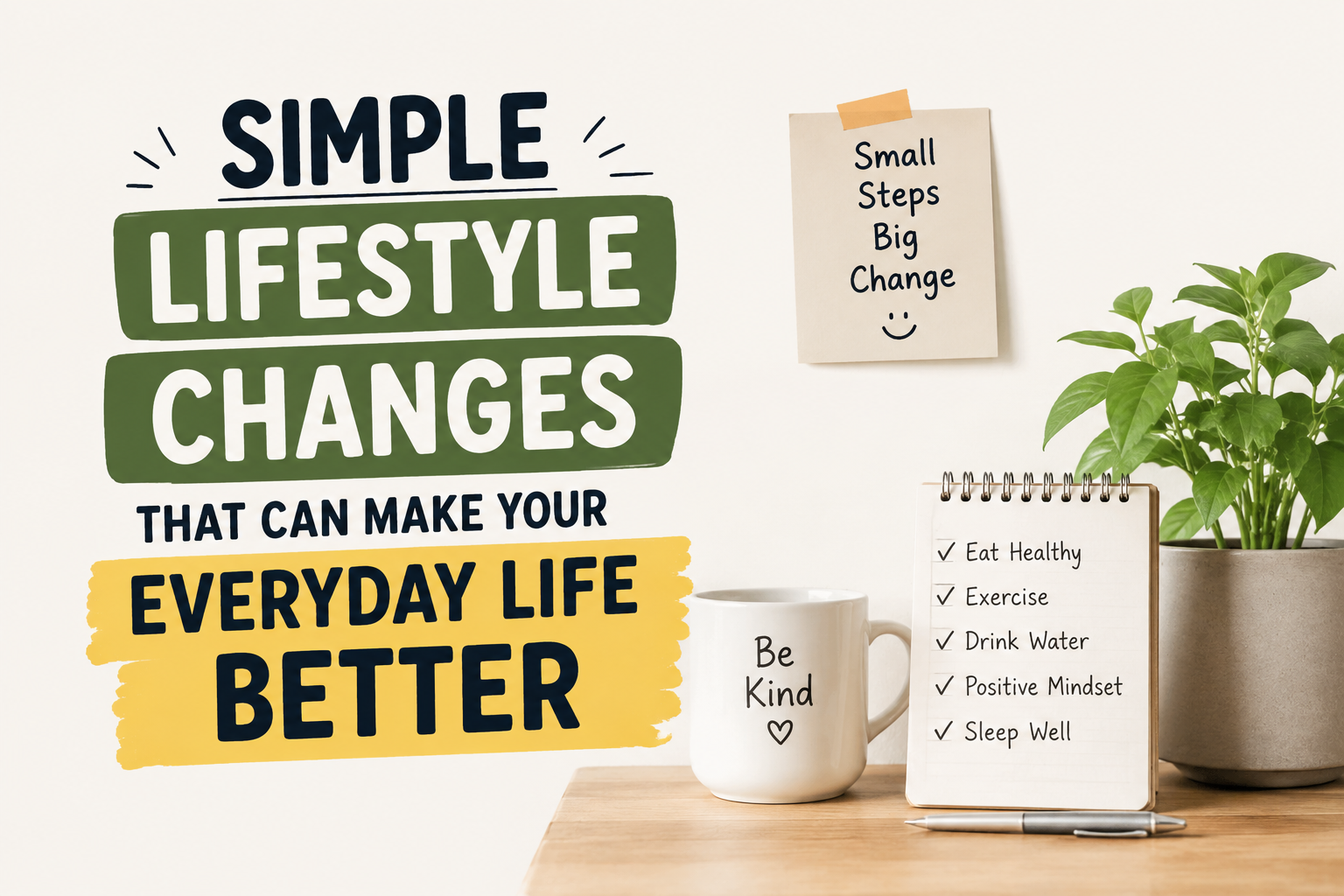
A better lifestyle does not always require a dramatic transformation. Many people believe that improving their life means following a strict routine, waking up extremely early, exercising every day, or completely changing their diet. In reality, sustainable lifestyle improvements often come from small decisions that are easy to repeat.
The way you spend your mornings, manage your time, organize your surroundings, use technology, eat your meals, and relax in the evening can have a major influence on how your days feel. Small improvements in these areas can make everyday life more comfortable and organized without creating unnecessary pressure.
The goal is not to create a perfect lifestyle. The goal is to build habits that work with your personality, responsibilities, and schedule.
Start Your Day Without Immediately Checking Your Phone
One of the simplest lifestyle changes is delaying phone use after waking up.
Many people reach for their smartphones almost immediately after opening their eyes. Notifications, social media posts, emails, news updates, and messages can quickly fill the mind with information before the day has properly started.
Instead, try giving yourself some quiet time first.
You can drink water, open a window, stretch for a few minutes, make your bed, or simply sit quietly and think about the day ahead.
This small change creates a separation between waking up and entering the digital world.
You do not have to avoid your phone for hours. Even 15 to 30 minutes without checking notifications can make the beginning of the day feel less rushed.
Create a Morning Routine That Is Realistic
There is no universal perfect morning routine.
Some people enjoy exercising early. Others prefer a slow breakfast. Some have work responsibilities that require them to start immediately.
The best routine is one that you can actually maintain.
A simple morning routine might include:
- Getting out of bed at a consistent time
- Drinking water
- Washing up
- Making the bed
- Eating breakfast
- Reviewing important tasks
- Spending a few minutes stretching
The routine doesn’t need to contain ten different activities.
Consistency is more valuable than complexity.
If your routine takes too long, you may eventually stop following it. A simple routine that takes 20 minutes can be much more useful than an ambitious routine that requires two hours.
Make Your Living Space Easier to Manage
Your surroundings can influence your daily experience.
A room filled with unnecessary objects can make simple tasks feel more difficult. You may spend extra time searching for things, cleaning surfaces, or moving objects around.
This is why organization can become an important lifestyle habit.
You don’t need to completely redesign your home.
Start with one area.
Clean your desk.
Organize one drawer.
Remove clothes you no longer use.
Keep commonly used objects in convenient places.
Small improvements accumulate over time.
An organized environment can also make it easier to focus when working or studying from home.
Learn to Plan Your Day
Many people create long lists of tasks and then feel frustrated when they cannot complete everything.
Instead of trying to finish ten major tasks in one day, identify the most important priorities.
For example, choose three tasks that would make the day successful if completed.
You can then add smaller tasks around them.
This approach reduces unnecessary pressure.
A daily plan can be written in a notebook, calendar, smartphone application, or simple piece of paper.
The method doesn’t matter as much as using a system that you will actually follow.
Eat More Mindfully
A healthy lifestyle doesn’t necessarily mean following complicated diets.
One useful improvement is simply paying more attention to what and how you eat.
Instead of eating every meal while watching videos or scrolling through social media, occasionally try eating without distractions.
This allows you to notice the taste, texture, and amount of food you are consuming.
Another simple approach is to include a variety of foods in your regular meals.
Vegetables, fruits, whole grains, protein sources, and healthy fats can all contribute to a balanced eating pattern.
There is no need to completely eliminate foods you enjoy.
A sustainable lifestyle allows room for enjoyment while maintaining reasonable balance.
Drink Enough Water
Water is easy to overlook because it does not feel like a complicated lifestyle habit.
However, staying adequately hydrated is an important part of everyday well-being.
Many people become busy and simply forget to drink water.
Keeping a reusable bottle nearby can make the habit easier.
You can keep one at your desk, in your bag, or beside your workspace.
Rather than trying to drink a huge amount at once, make hydration part of your normal routine throughout the day.
Add More Movement to Your Day
Exercise does not always have to mean spending an hour in a gym.
Movement can be incorporated into ordinary activities.
You can walk while talking on the phone, take the stairs when practical, stretch during work breaks, walk after meals, or spend time doing household tasks.
If you enjoy structured exercise, that’s excellent.
But people who dislike traditional workouts can still find ways to remain active.
The best form of movement is one that you enjoy enough to continue doing.
Protect Your Sleep Schedule
Sleep often gets sacrificed when life becomes busy.
People may stay awake late watching videos, working, gaming, or scrolling through social media.
The problem is that poor sleep habits can make the following day feel more difficult.
Creating a consistent nighttime routine can help.
Try reducing stimulating activities before bed.
Dim the lights.
Prepare your clothes for the next morning.
Put your phone away for a while.
Read a book or listen to something relaxing.
The goal is to give your mind a clear signal that the day is coming to an end.
Take Breaks From Screens
Digital technology is now part of almost every area of life.
Phones and computers are useful, but constant screen exposure can make it difficult to mentally disconnect.
Try creating small periods during the day when you don’t use digital devices.
You could take a walk without your phone in your hand, have a meal without watching videos, or spend an evening doing an offline activity.
Reading, cooking, drawing, gardening, cleaning, walking, or talking with family can provide a different type of mental stimulation.
Spend Time With People You Care About
A good lifestyle is not only about productivity.
Relationships matter too.
Regular conversations with family members, friends, or people you trust can make everyday life more enjoyable.
Social connection does not require expensive outings.
You can have a conversation over tea, cook together, take a walk, or simply spend time in the same room.
In a busy world, making time for people can become surprisingly difficult.
That’s why it is worth treating meaningful relationships as part of your lifestyle rather than something you do only when you have free time.
Create Time for Yourself
Personal time is another important part of a balanced lifestyle.
You don’t have to spend every free moment being productive.
Sometimes you need time to do something simply because you enjoy it.
That might be listening to music, watching a movie, reading, playing a game, cooking, gardening, or exploring a hobby.
Enjoyment is not wasted time.
A lifestyle based entirely on work and responsibilities can eventually become exhausting.
Spend More Intentionally
Another useful lifestyle habit is becoming more conscious about spending.
Before purchasing something, ask whether you genuinely need it.
Online shopping makes it extremely easy to buy things instantly.
A short waiting period can help prevent unnecessary purchases.
You can also create categories for essential expenses, entertainment, savings, and personal purchases.
The purpose isn’t to remove all enjoyment from spending.
It’s to make sure your money supports the lifestyle you actually want.
Learn Something New
Learning does not have to stop after formal education.
You can learn a new recipe, language, software skill, craft, instrument, or practical household skill.
Learning keeps everyday life interesting.
It can also create opportunities to discover interests you didn’t know you had.
Even 20 minutes of learning several times a week can become meaningful over a year.
Avoid Trying to Change Everything at Once
One of the biggest mistakes people make when improving their lifestyle is attempting to change everything simultaneously.
They create a strict diet, demanding workout schedule, detailed productivity system, early-morning routine, reading goal, financial plan, and digital detox all at once.
The enthusiasm may last for a few days.
Then the routine becomes overwhelming.
Instead, choose one or two habits.
Make them comfortable.
Once they become part of your normal life, introduce another improvement.
This slower approach may feel less exciting, but it is often easier to maintain.
Final Thoughts
A better lifestyle doesn’t require perfection.
Small decisions repeated consistently can gradually change how your days feel.
Wake up with less digital noise. Keep your surroundings organized. Move regularly. Eat with more awareness. Protect your sleep. Spend time with people you care about. Make room for hobbies and personal interests.
Most importantly, create a lifestyle that fits your real life.
The best routine isn’t the one that looks impressive on social media. It is the one that makes your everyday life easier, healthier, more enjoyable, and more sustainable.
Change doesn’t have to happen overnight.
Sometimes the most meaningful improvements begin with one small habit repeated every day.