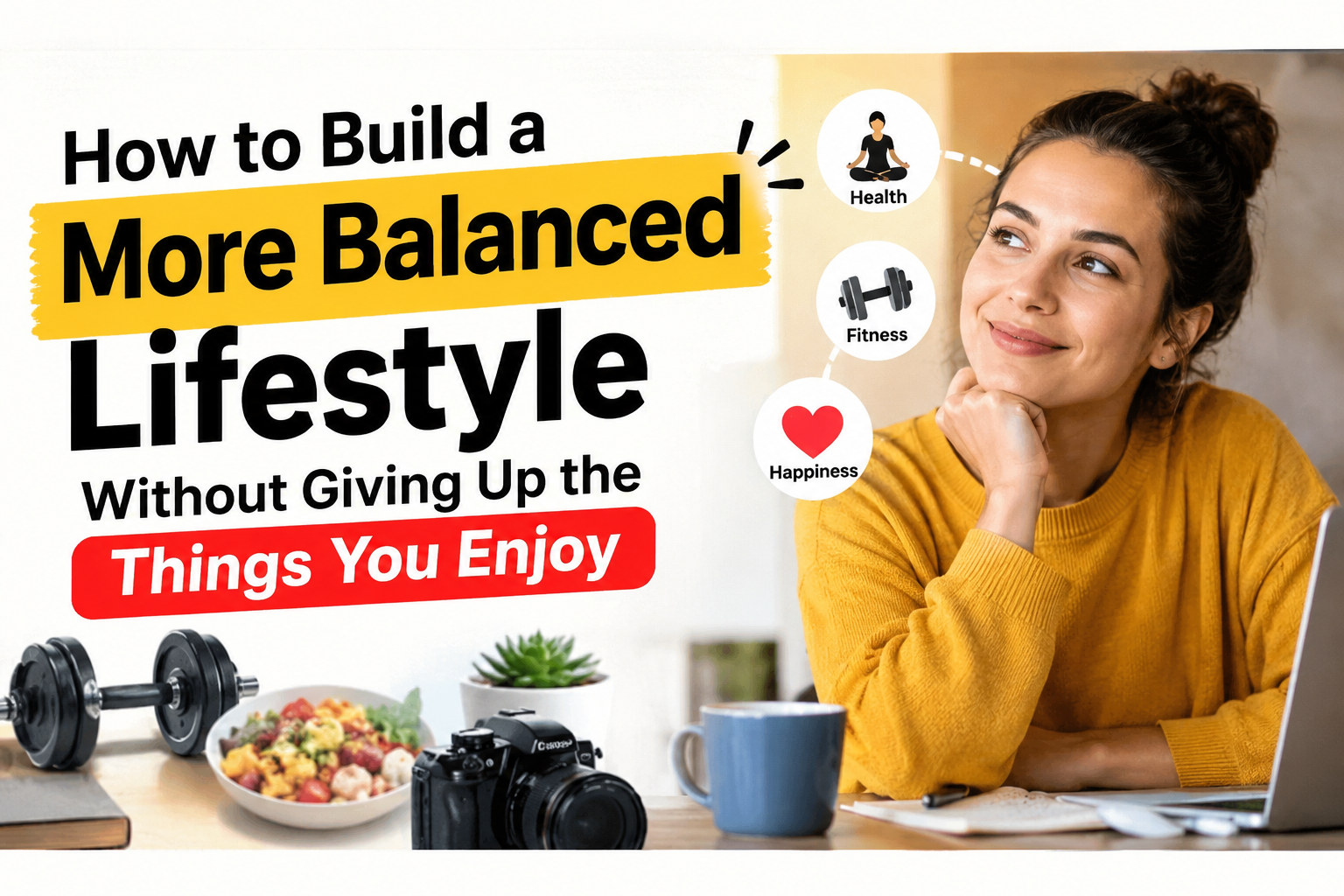
Modern life can feel like a constant competition between work, responsibilities, health, relationships, money, entertainment, and personal goals. People often want to improve themselves but become frustrated because they believe a better lifestyle requires giving up everything they enjoy.
A balanced lifestyle does not have to work that way.
You don’t have to stop enjoying your favorite foods, delete every social media application, wake up at five in the morning, or spend every evening exercising. A practical lifestyle is about learning how to give different parts of your life enough attention without allowing one area to completely take over.
Balance is not about making every day perfect. It is about creating a routine that can survive busy days, unexpected responsibilities, and changes in circumstances.
Understand What Balance Means for You
The first step toward a balanced lifestyle is understanding that balance looks different for everyone.
A student may need more time for studying.
A working professional may need better boundaries between work and personal life.
A parent may have limited personal time.
Someone working from home may struggle to separate professional responsibilities from household activities.
Therefore, copying someone else’s routine isn’t always useful.
Instead, identify the areas that matter most to you.
These might include:
- Work or education
- Physical activity
- Food
- Sleep
- Family
- Friends
- Hobbies
- Personal finances
- Relaxation
- Learning
You don’t need to improve every category at the same time.
Start with the areas causing the biggest problems.
Stop Thinking in Terms of Perfect Days
Social media often creates unrealistic expectations about lifestyle.
You may see people showing perfect morning routines, organized homes, expensive meals, workouts, travel, and productive workdays.
Real life is rarely that organized.
Some days will be productive.
Other days will be chaotic.
You may sleep late, eat convenience food, skip exercise, or spend too much time watching television.
That doesn’t mean your lifestyle has failed.
A balanced lifestyle allows flexibility.
The goal is to return to your normal routine after an imperfect day instead of abandoning your goals completely.
Create Flexible Routines
Rigid schedules can be difficult to maintain.
Instead of saying, “I must exercise at exactly 7:00 every morning,” create flexible options.
For example:
“If I have time in the morning, I’ll exercise then. Otherwise, I’ll walk in the evening.”
This creates a backup plan.
The same principle can apply to other habits.
If you cannot cook a complete meal, choose a simpler option.
If you cannot complete a long workout, take a short walk.
If you don’t have time to clean the entire house, organize one area.
Flexible routines are often easier to maintain than strict ones.
Learn the Difference Between Rest and Distraction
Rest is necessary.
However, not every activity that feels relaxing actually helps you recover.
Scrolling through social media for an hour may feel like a break, but sometimes it leaves you mentally tired.
True rest can take many forms.
You might sit quietly, take a walk, listen to music, read, talk with someone, take a nap, or enjoy a hobby.
The important question is:
“Do I feel better after doing this?”
If the answer is yes, the activity may be useful downtime.
If you regularly finish an activity feeling frustrated or exhausted, it may be worth reconsidering how much time you spend on it.
Make Technology Work for You
Technology can either improve your lifestyle or dominate it.
Smartphones can help with calendars, communication, navigation, banking, learning, entertainment, and work.
The problem begins when technology becomes an automatic response to boredom.
You open your phone without a specific reason.
One notification becomes ten minutes of scrolling.
A short break becomes an hour.
A useful habit is to create intentional technology boundaries.
For example, you might avoid checking social media during meals or keep your phone away while working on important tasks.
You don’t need to completely eliminate technology.
You simply need to decide when it deserves your attention.
Build Better Weekend Habits
Weekends can easily disappear.
You may spend most of Saturday recovering from the week and then realize Sunday evening has arrived.
Instead, consider giving your weekends a loose structure.
You could reserve part of the weekend for household tasks, another part for social activities, and some time for complete relaxation.
You don’t need a strict timetable.
A simple plan can prevent the entire weekend from disappearing without doing anything meaningful.
Make Food Enjoyable and Practical
A balanced lifestyle should leave room for foods you enjoy.
Trying to follow an extremely restrictive diet can make eating feel stressful.
Instead, focus on creating practical eating habits.
Cook when you have time.
Keep simple ingredients available.
Include nutritious foods regularly.
Enjoy your favorite meals occasionally.
The goal is to create a pattern that you can continue.
A lifestyle that makes you miserable is unlikely to be sustainable.
Find Physical Activities You Actually Like
Exercise becomes easier when you stop treating it as punishment.
You don’t have to choose the most difficult workout.
You could walk, cycle, dance, swim, play a sport, do yoga, or follow an at-home workout.
The activity should fit your preferences and physical ability.
If you enjoy something, you’re more likely to repeat it.
Consistency matters more than choosing the most fashionable exercise routine.
Keep Your Home Comfortable
Your home should support your lifestyle.
A comfortable environment can make it easier to relax and organize your day.
This doesn’t mean your home needs expensive furniture or designer decoration.
Simple changes can have a noticeable effect.
Keep frequently used objects easy to find.
Create a comfortable place to sit.
Keep your workspace separate from entertainment when possible.
Use lighting that feels appropriate for different activities.
Remove items that create unnecessary clutter.
A home doesn’t need to look perfect to feel comfortable.
Set Boundaries Around Work
Work can easily consume personal time, particularly when working remotely.
Emails, messages, notifications, and unfinished tasks can make it difficult to switch off.
If possible, create a clear end to your workday.
Close your laptop.
Leave your workspace.
Change clothes.
Take a short walk.
Do something that signals the transition from work to personal time.
Even a simple routine can help create psychological separation.
Protect Your Relationships
When people become busy, relationships are often one of the first things neglected.
You may assume that friends and family will always be available later.
But maintaining relationships requires attention.
A short conversation can matter.
A shared meal can matter.
A message asking how someone is doing can matter.
You don’t need to organize expensive events.
Regular, genuine communication is often more valuable.
Make Room for Hobbies
Hobbies can make life feel more interesting.
They also provide an activity that isn’t directly connected to work or obligations.
You could learn photography, gardening, cooking, painting, music, writing, gaming, crafts, or another activity.
The hobby doesn’t need to become a business.
Not everything needs to be monetized.
Sometimes it is valuable simply because you enjoy doing it.
Manage Your Money as Part of Your Lifestyle
Financial stress can affect almost every other area of life.
Creating a simple spending system can help.
Start by understanding where your money goes.
Separate essential expenses from optional purchases.
Set aside money for future goals when possible.
Avoid making lifestyle decisions based entirely on what other people appear to own.
Social media can create pressure to constantly upgrade phones, clothes, cars, holidays, and homes.
A balanced lifestyle should reflect your actual priorities rather than someone else’s highlight reel.
Give Yourself Time to Think
Modern life can become extremely noisy.
Notifications, videos, advertisements, messages, news, and entertainment can fill nearly every quiet moment.
Occasionally spend time without external stimulation.
Go for a walk.
Sit outside.
Write in a notebook.
Think about your goals.
Ask yourself whether your current routine is actually moving you toward the life you want.
You don’t need to have all the answers.
Reflection simply creates space to notice what is working and what isn’t.
Don’t Compare Your Timeline With Someone Else’s
Everyone develops at a different pace.
One person may be financially successful at 25.
Another may discover their career direction at 35.
Someone may travel frequently while another person focuses on family.
Comparing these lives can create unnecessary dissatisfaction.
Instead of asking, “Why don’t I have what they have?” ask:
“What would make my own life better?”
That question is much more useful.
Make Small Changes First
Lifestyle improvement becomes easier when you reduce the size of the change.
Instead of deciding to exercise every day, begin with three days a week.
Instead of promising to read one book every week, read ten pages a day.
Instead of completely deleting social media, create specific periods when you don’t use it.
Small habits can become part of your identity over time.
Once they feel normal, you can build on them.
Accept That Balance Changes
Your ideal lifestyle today may not be the same six months from now.
Work circumstances can change.
Family responsibilities can change.
Financial priorities can change.
Your interests can change.
Therefore, lifestyle balance should be flexible.
Review your routine occasionally.
Ask what is working.
Ask what is creating unnecessary stress.
Then make adjustments.
There is no requirement to follow the same routine forever.
Final Thoughts
A balanced lifestyle isn’t about removing everything enjoyable from your life.
It is about making conscious choices about where your time, energy, attention, and money go.
Work hard, but make time to rest.
Eat well, but enjoy food.
Exercise, but choose activities you actually like.
Use technology, but don’t let it control every quiet moment.
Save money, but allow yourself reasonable enjoyment.
Spend time with people who matter.
And most importantly, accept that some days will not go according to plan.
A sustainable lifestyle is not built through perfection. It is built through flexibility, awareness, and small decisions repeated over time.
The best lifestyle is not the one that looks perfect from the outside.
It is the one that feels meaningful and manageable from the inside.