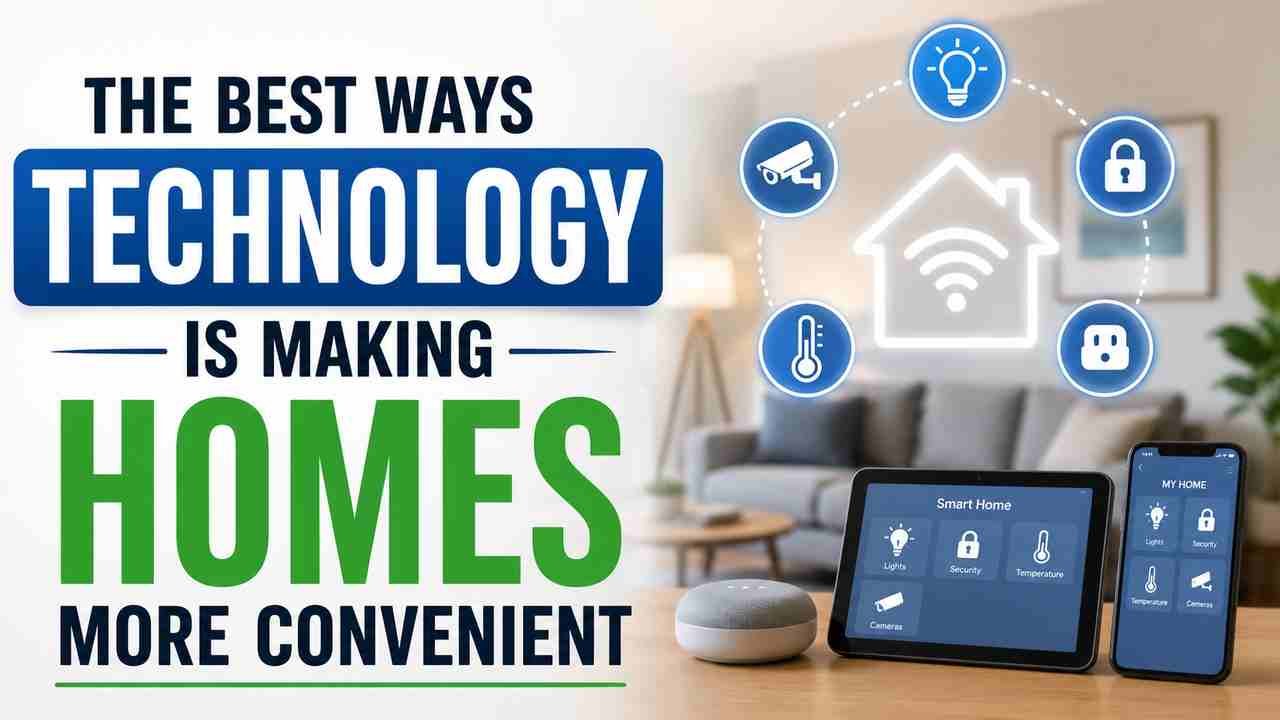
Smart home technology has changed dramatically over the last few years. What started with simple smart bulbs and connected speakers has developed into a much broader ecosystem involving security cameras, sensors, appliances, lighting, thermostats, entertainment systems, cleaning robots, and intelligent automation.
In 2026, the interesting part of smart-home technology is not simply whether a device can connect to Wi-Fi. The bigger question is whether different gadgets can work together to solve everyday problems.
Current consumer technology trends show smart-home products moving toward connected ecosystems instead of isolated gadgets.
This shift could make smart homes easier to manage while also creating new challenges involving compatibility, privacy, setup, and security.
What Makes a Gadget “Smart”?
A smart gadget usually contains connectivity, sensors, software, or some combination of these technologies.
A traditional light bulb can only be switched on and off.
A smart bulb can connect to an app or voice assistant and may allow the user to schedule lighting, change brightness, or create routines.
The difference becomes even more interesting when several devices communicate with one another.
For example, a motion sensor could detect someone entering a room and trigger the lights automatically.
That is where smart-home automation becomes more useful.
Smart Lighting Is Still One of the Best Starting Points
Smart lighting remains one of the easiest ways to introduce automation into a home.
Users can control lights from smartphones, voice assistants, or automated schedules.
A bedroom light could gradually become brighter in the morning.
Living-room lights could turn off automatically when everyone leaves.
Outdoor lights could activate at a particular time.
The advantage is convenience.
Instead of manually controlling every light, users can create routines that happen automatically.
Modern smart lighting can also provide different brightness levels and color temperatures, allowing homeowners to create different environments for work, relaxation, entertainment, and sleep.
Smart Plugs Can Make Ordinary Devices Smarter
One of the most affordable smart-home gadgets is the smart plug.
A smart plug allows users to control compatible electrical devices through an app or automation system.
This means people don’t necessarily have to replace every appliance with an expensive smart version.
For example, a traditional lamp can become part of a smart-home routine by connecting it to a smart plug.
Users can schedule it, turn it off remotely, or include it in an automation.
This makes smart plugs particularly useful for people who want to experiment with home automation without spending a lot of money.
Smart Sensors Are Becoming More Important
Sensors are one of the less glamorous but more useful parts of a smart home.
Motion sensors, temperature sensors, door sensors, humidity sensors, and water-leak sensors can provide information that helps other devices respond automatically.
Consider a simple door sensor.
When a door opens, the system could notify the homeowner.
A motion sensor could activate hallway lighting at night.
A water sensor placed near a washing machine could provide an alert if it detects moisture.
These devices demonstrate an important principle of smart-home technology: automation works best when gadgets can react to real-world events.
Smart Security Cameras
Security cameras remain another major smart-home category.
Modern cameras can provide remote viewing, motion notifications, night vision, and other intelligent features.
Some systems can distinguish between different types of activity, reducing unnecessary alerts.
For example, a camera might detect movement and send a notification only when a person is present.
However, security cameras should be installed carefully.
Users should change default passwords, enable available security protections, keep firmware updated, and understand how recordings are stored.
A smart security device is only useful if it is also properly secured.
Robot Vacuum Cleaners
Robot vacuum cleaners have moved from novelty gadgets toward practical household tools.
The latest models can use mapping and sensors to navigate rooms more efficiently.
Some can identify obstacles, plan cleaning routes, and return to charging stations automatically.
Higher-end models can also perform additional cleaning tasks depending on their design.
The biggest advantage is automation.
A user can schedule cleaning without manually operating a traditional vacuum every day.
For busy households, this can save time.
Smart Kitchen Gadgets
The kitchen is becoming another interesting area for connected gadgets.
Smart cooking devices can provide timers, temperature monitoring, remote control, recipe assistance, and automation.
Connected coffee machines, smart ovens, kitchen scales, air fryers, and other appliances can potentially become part of a larger ecosystem.
However, consumers should be careful about buying smart versions of products that don’t provide meaningful benefits.
A gadget is not automatically better simply because it has an app.
The most useful products are those where connectivity solves a genuine problem.
Smart Displays and Home Assistants
Smart displays can act as control centers for connected devices.
Instead of opening several different apps, users may be able to control lights, cameras, thermostats, entertainment systems, and other gadgets from a central interface.
Voice assistants can make the experience even easier.
A homeowner could use a simple command to control several devices at once.
For example:
“Good night.”
That command could turn off selected lights, adjust the temperature, lock compatible doors, and activate security devices.
This type of routine is where the smart-home concept becomes more powerful.
The Importance of Compatibility
One of the biggest problems with smart-home technology has traditionally been compatibility.
A user might buy products from different manufacturers only to discover that they don’t communicate properly.
The industry is increasingly focused on interoperability and ecosystem compatibility.
This is important because consumers don’t want to research technical standards every time they purchase a light bulb or sensor.
A good smart home should feel simple.
The technology should work quietly in the background instead of requiring constant troubleshooting.
AI Could Make Smart Homes More Intelligent
Artificial intelligence could eventually change how people interact with smart homes.
Instead of manually creating complicated routines, users could describe what they want.
For example:
“Make the house comfortable when I arrive home.”
An intelligent system could potentially learn the user’s preferences and coordinate lighting, temperature, entertainment, and other connected devices.
However, AI should not be used simply as a marketing label.
A genuinely useful AI feature should reduce complexity or improve personalization.
Privacy Matters
Smart-home gadgets can collect large amounts of information.
Cameras may capture video.
Speakers may process voice commands.
Sensors can reveal when people are home.
Connected appliances can provide information about daily routines.
That makes privacy an important consideration.
Before purchasing a smart gadget, consumers should check what information it collects, where the information is processed, whether cloud storage is required, and what controls are available.
Do You Need a Fully Smart Home?
No.
You don’t need dozens of connected gadgets to benefit from smart-home technology.
A simple setup could include:
- Smart bulbs
- Smart plugs
- One security camera
- Motion sensors
- A compatible home assistant
Users can then expand gradually.
This approach is often better than purchasing everything at once.
Start with a problem you want to solve.
If you constantly forget to turn off lights, automate lighting.
If you want better security, consider sensors or cameras.
If cleaning takes too much time, a robot vacuum may be more useful.
Final Thoughts
Smart-home technology is becoming less about individual gadgets and more about connected experiences.
The best smart-home products are not necessarily the ones with the longest feature lists. They are the ones that make daily tasks easier without creating additional complexity.
As connectivity, automation, and AI continue to improve, homes could become increasingly responsive to their occupants.
The future of smart homes may therefore not be about controlling everything manually from a phone.
It may be about creating an environment where technology quietly handles routine tasks in the background.